




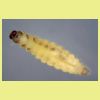

Food Plant: Luma apiculata (Chilean Myrtle), L. chequen (White Chilean Myrtle)
Egg: underside of leaves
Mine: March; June; October-December
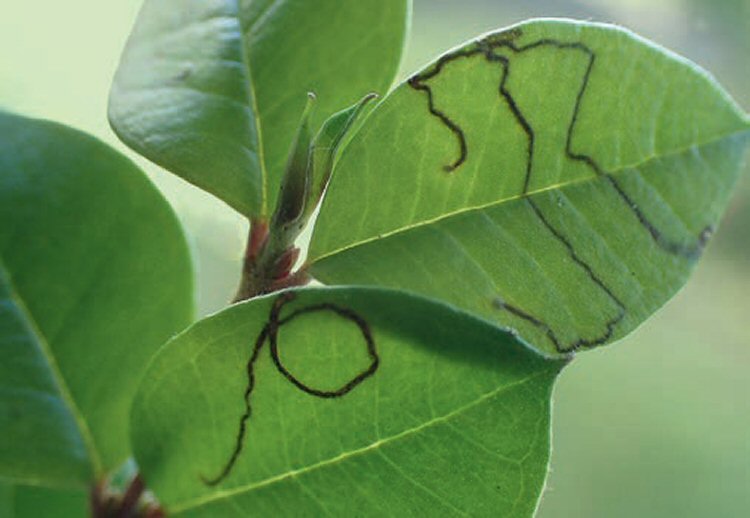
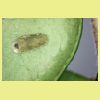
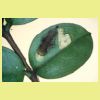
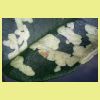
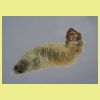
Notes: Initially a long narrow twisting mine is formed (as shown) which terminates in a small blotch, usually at the edge of the leaf and often at or near the leaf tip. The blotch forms the basis of the first of three cut out cases. The leaves forming the cases are intially green but become brown as they age. The larva feeds by attaching its case to the underside of leaves, leaving a brown mark ('footprint' (Heckford, Beavan & Lees, 2023)) where it has fed. The initial feeding is by eating small sections of the lower epidermis. Later it mines, rather like the Coleophoridae, by eating the lower leaf epidermis to form irregular blotches. The larva pupates in its third case, which is attached to the underside of the leaf. This is an adventive South American species and constitutes the first records of this species in the UK and mainland Europe. Records are from Cornwall at present (Heckford, Beavan & Lees, 2023).
Data: 16.x.2020, Cornwall
Image:© Bob Heckford & Stella Bevan
References:
Heckford, R.J., Beavan, S.D. and Lees, D.C. 2023. Simacauda dicommatias (Meyrick,
1931) (Lepidoptera: Incurvariidae), a South American species established
in Cornwall, new to the British Isles and unknown in mainland Europe, with
first details of its biology. Entomologist’s Gazette 73 (4): 193-218.
sponsored by Colin Plant Associates (UK) LLP/Consultant Entomologists