
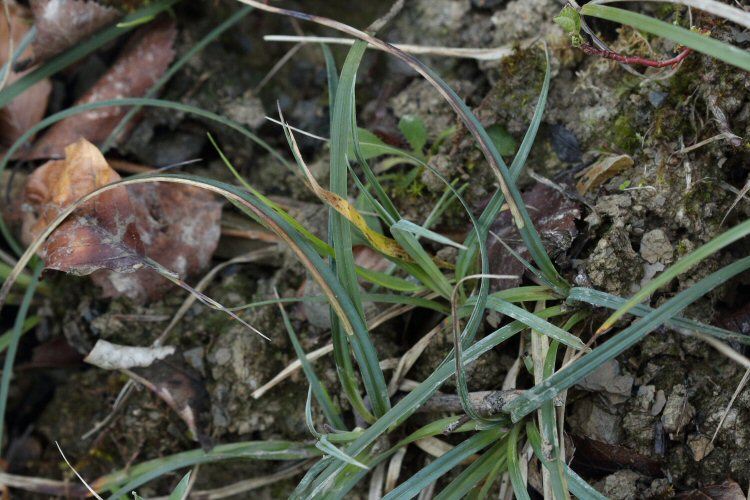
Food Plant: Carex flacca (Glaucous Sedge), other Carex species Elsewhere: Deschampsia cespitosa, Melica sp., Sesleria caerulea
Egg: laid on the leaf tip
Mine: September-April
Notes: May either make a short broad mine, which fills the leaf tip or a broader one which occupies half the leaf between the midrib and leaf edge. There may be more than one mine in a leaf. The larva overwinters in the mine and extends it in the spring. Pupation occurs in the angle of a leaf, under a girdle. Found in chalky and sandy areas throughout Ireland and Britain. A mine in spring on Carex flacca. The mining activity of the larva causes the tip of the leaf to die, which can be a good way of detecting mined leaves. Much of the older part of the mine, formed over the winter and the previous autumn is invisible in the dead leaf tip, with just the fresh recent mining (where the leaf has not yet died) visible on the left. Adult reared.
Data: 07.iv.2023, Watchet, Somerset, VC5
Image:© WillLandon
sponsored by Colin Plant Associates (UK) LLP/Consultant Entomologists